Sessions
Date, delivery mode, trainer and fee are specific to each session. Fees are per person.
Request a quote for a date for your organisation or for the next run.
Application formNo membership required
Get a quote
Training content
Overview
BRCGS Risk Assessment Training is designed to provide the knowledge and practical skills required to systematically identify, analyse and evaluate risks that may arise in product safety and quality management systems and to establish appropriate control measures.
The language of the training is Turkish. The training is delivered online. The training provider is BRCGS.
About the Training
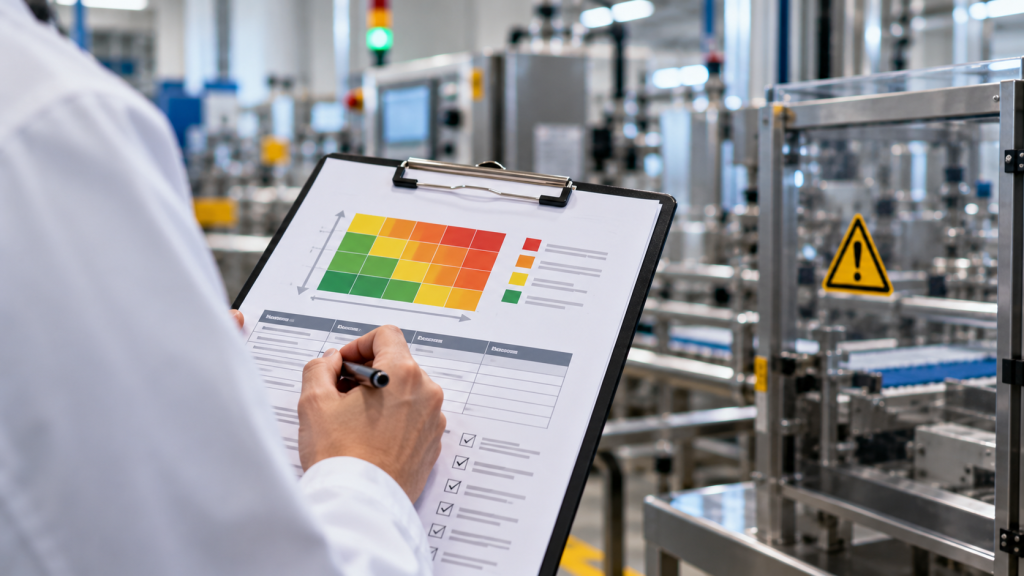
The training covers the fundamental principles of risk assessment, risk terminology, the difference between hazards and risks, likelihood and severity assessment, different risk assessment models, the use of risk matrices, the identification of control measures, the evaluation of residual risk, the documentation and review of risk assessments, and their application to BRCGS requirements.
Who Should Attend?
- Quality managers and quality personnel
- Technical managers and technical personnel
- Product and food safety team members
- Production and operations managers
- Personnel responsible for risk assessments
- Internal auditors
- BRCGS auditors
- Consultants
Personnel involved in the implementation of product safety management systems
Objectives and Outcomes
The aim is to enable participants to use risk assessment terminology correctly, understand different risk assessment methods and select the appropriate method, determine risk levels using likelihood and severity criteria, and produce objective and systematic risk assessments that comply with BRCGS requirements.
By the End of the Training
Participants will be able to:
- Explain the purpose and fundamental principles of risk assessment.
- Distinguish between the concepts of hazard and risk.
- Use risk assessment terminology correctly.
- Define the scope of a risk assessment.
- Systematically identify hazards and sources of risk.
- Evaluate likelihood and severity criteria.
- Select and apply different risk assessment models.
- Determine risk levels and priorities.
- Establish appropriate control measures.
- Review and update risk assessments.
Programme and Method
Overview of Risk Assessment
- Purpose of risk assessment
- Risk-based approach in BRCGS standards
- Role of risk assessment in the management system
- Risk assessment terminology
- Systematic and objective approach
Hazard and Risk Concepts
- Concept of hazard
- Concept of risk
- Difference between hazard and risk
- Sources of risk
- Potential consequences
- Existing control measures
Risk Assessment Process
- Defining the scope
- Identifying risks
- Evaluating existing controls
- Risk analysis
- Determining the risk level
- Establishing control activities
- Documenting the results
Identifying Risks
- Product-related risks
- Process-related risks
- Raw material and supplier risks
- Equipment and infrastructure risks
- Personnel-related risks
- Storage and distribution risks
- External risks
Likelihood Assessment
- Establishing likelihood criteria
- Using past incidents
- Frequency and exposure
- Evaluating process data
- Taking existing controls into account
- Objective scoring criteria
Severity Assessment
- Determining the potential impact
- Impacts on product safety
- Impacts on quality and legal compliance
- Impacts on customers and consumers
- Impacts on the organisation
- Defining severity levels
Using a Risk Matrix
- Combining likelihood and severity
- Calculating risk scores
- Distinguishing between low, medium and high risks
- Acceptable risk levels
- Identifying priority risks
- Consistent use of the risk matrix
Different Risk Assessment Models
- Qualitative risk assessment
- Semi-quantitative risk assessment
- Risk matrix
- Scoring and ranking methods
- FMEA approach
- Decision trees and control questions
- Selecting the appropriate model
Establishing Risk Criteria
- Defining risk criteria
- Scoring systems
- Acceptance criteria
- Risk tolerance levels
- Ensuring consistent use of criteria
- Justifying the criteria
Determining Control Measures
- Evaluating existing controls
- Determining the need for additional controls
- Preventive controls
- Detective controls
- Hierarchy of controls
- Reducing risks to an acceptable level
Residual Risk Assessment
- Risk before controls
- Risk after controls
- Concept of residual risk
- Evaluating control effectiveness
- Decision on acceptability
- Need for additional action
Risk-Based Prioritisation
- Identifying high-risk areas
- Allocating resources according to risk level
- Determining monitoring frequencies
- Audit and control frequencies
- Planning priority activities
Documentation of Risk Assessments
- Scope of the assessment
- Risk criteria
- Identified risks
- Likelihood and severity scores
- Existing and additional controls
- Responsibilities
- Review dates
Reviewing Risk Assessments
- Periodic review
- New products and processes
- Changes to raw materials and suppliers
- Changes to equipment and facilities
- New legal or scientific information
- Nonconformities and incidents
- Failure of control measures
Risk Assessment in BRCGS Applications
- Supplier risk assessments
- Raw material risk assessments
- Internal audit programmes
- Environmental monitoring
- Allergen management
- Food and product defence
- Food fraud
- Pest control
- Maintenance and equipment management
- Storage and distribution activities
Common Mistakes in Risk Assessments
- Unclear risk criteria
- Inadequate hazard identification
- Failure to justify likelihood and severity
- Incorrect reflection of controls in the risk score
- Applying the same approach to all risks
- Outdated assessments
- Failure to conduct an assessment following a change
Verifying the Effectiveness of Risk Assessment
- Monitoring the results of control activities
- Evaluating nonconformities
- Trend analyses
- Internal audit results
- Complaint and incident data
- Reassessing risk levels
Case Studies
- Identifying example risks
- Likelihood and severity scoring exercises
- Risk matrix exercise
- Comparing different risk assessment models
- Determining control measures
- Residual risk assessment
- Preparing a sample BRCGS risk assessment
Training Method
The training is delivered through presentations, evaluation of BRCGS requirements, case studies, application of different risk assessment models, likelihood and severity scoring exercises, risk matrix exercises and the preparation of sample risk assessments.
Attendance and Certificate
Certificate Rule
A certificate of attendance is issued to all participants whose attendance has been confirmed. To receive a certificate of achievement, participants must achieve a passing grade in the examination at the end of the training; participants who use all their examination attempts but do not pass will be issued a certificate of attendance.
FAQ and Resources
Who is the BRCGS Risk Assessment Training suitable for?
It is intended for quality and technical personnel, manufacturers, consultants, auditors and relevant managers involved in developing, implementing or reviewing risk assessments within product safety and quality management systems.
What is the main objective of the training?
The objective is to enable participants to understand different risk assessment models, select the method appropriate to the risks within their organisation, and develop systematic, consistent and evidence-based risk assessments that meet BRCGS requirements.
Which factors are considered in risk assessment?
Risk assessment considers the likelihood of the hazard or event occurring, the severity of its potential impact, the existing control measures and the residual risk remaining after these controls have been implemented.
Does the training include practical exercises?
Yes. The training includes exercises on creating risk matrices, scoring likelihood and severity, using different risk assessment models and preparing sample BRCGS risk assessments.
Is there an examination at the end of the training?
Yes. An assessment examination is administered at the end of the training.
References
- BRCGS Risk Assessment Course MaterialsThere are no sessions open for applications at the moment.You can leave an information request to be notified when a date is planned, or for in-house training for your organisation.
- BRCGS Global Standards AGFO · Contact[["General Enquiry","Partnership and Project","Technical Support","About the Content"],["General Enquiry","Partnership and Project","Technical Support","About the Content"]]
Contact Us
Choose the relevant area so your message reaches us under the right topic.
- BRCGS Product Safety Management Guidance
- Relevant BRCGS risk assessment guides and guidance documents